Choosing a reliable trusted chemical free mehndi manufacturer is the first step toward safe and beautiful henna application toward safe and beautiful henna application, especially when you want to avoid harmful side effects and enjoy the real benefits of henna.
Imagine this you’re getting ready for a wedding or a festival. The excitement is high, your outfit is perfect, and now it’s time for mehndi. But have you ever stopped to think about what exactly is going onto your skin?
Not all henna is the same.
Some give you a rich, natural color and nourish your skin, while others may look dark instantly but can harm your skin in the long run. Understanding the difference between natural and chemical henna can completely change your experience.
Let’s break it down in a simple and relatable way.
What is Natural Henna?
Natural henna comes from the leaves of the henna plant. These leaves are dried, crushed, and turned into a fine powder, known as natural henna powder.
When mixed with water or natural liquids like lemon juice, it creates a paste that stains the skin in a reddish-brown color.
This is what traditional mehndi has always been.
When you use chemical free mehndi, you’re using henna that is free from harmful additives. It’s safe, gentle, and even beneficial for your skin.
Why People Love Natural Henna
- Safe for all skin types
- No harmful side effects
- Gives a natural reddish-brown stain
- Has a soothing cooling effect
- Traditionally trusted for centuries
In short, if you care about your skin, natural henna cone or powder is always the better choice.
What is Chemical Henna?
Chemical henna is often marketed as “black henna” or “instant dark henna.” It is not purely natural. Instead, it contains chemicals like PPD (Para-phenylenediamine), which helps it give a darker stain quickly.
This is where the comparison of safe henna vs black henna becomes important.
While chemical henna may look attractive because of its dark color, it comes with risks.
Risks of Chemical Henna
- Skin irritation and allergies
- Burning sensation
- Long-term skin damage
- Possible scars or blisters
Many people regret using chemical henna after experiencing these side effects. That’s why choosing a trusted chemical free mehndi manufacturer is crucial. Understanding the mehndi powder difference can also help you choose a safer and more suitable product for your needs.
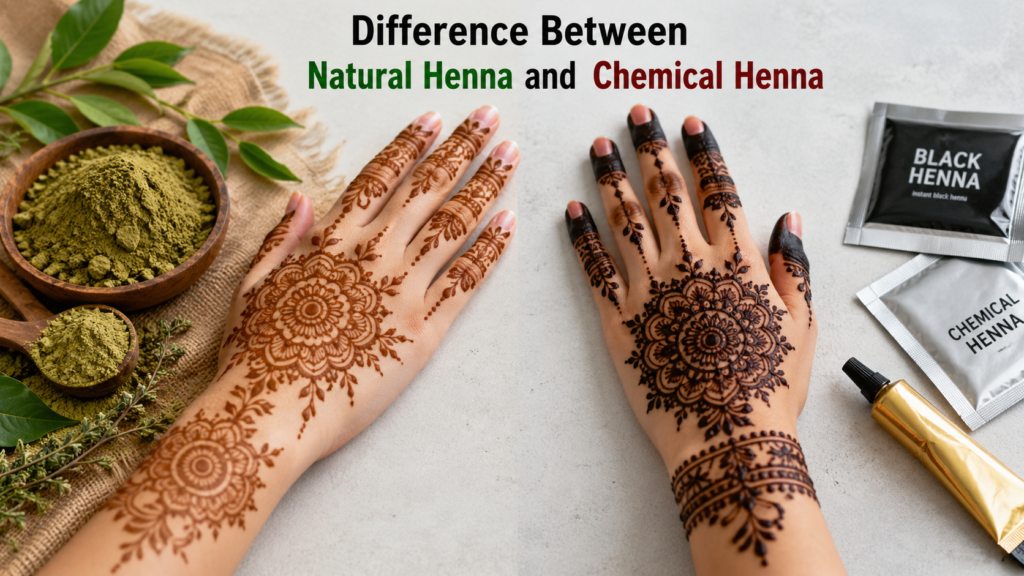
Natural vs Chemical Henna: Key Differences
Understanding the difference between natural vs chemical henna helps you make better decisions for your skin.
1. Ingredients
- Natural henna: Made from plant leaves
- Chemical henna: Mixed with synthetic dyes and chemicals
2. Color
- Natural henna: Orange to reddish-brown
- Chemical henna: Dark brown to black
3. Safety
- Natural henna: Safe and skin-friendly
- Chemical henna: Can cause irritation and allergies
4. Time to Develop
- Natural henna: Takes time to develop color
- Chemical henna: Gives instant dark color
5. Skin Benefits
- Natural henna: Cooling and nourishing
- Chemical henna: No benefits, only risks
This clear comparison of natural vs chemical henna shows why natural options are always preferred.
Safe Henna vs Black Henna: What You Should Choose
The debate between safe henna vs black henna is quite common, especially among first-time users.
Black henna may look tempting because of its instant dark color. But that color comes at a cost.
Safe henna, which is chemical-free, takes patience. It starts light and darkens over time. But the result is natural, beautiful, and completely safe.
Simple Tip
If your henna turns black instantly, it’s not natural.
Always choose chemical free mehndi for a worry-free experience.
Organic vs Regular Henna: Is There a Difference?
When comparing organic vs regular henna, the difference lies in how the henna is grown and processed.
- Organic henna: Grown without pesticides or chemicals
- Regular henna: May contain traces of chemicals during farming or processing
Both can be natural, but organic henna powder is a cleaner and purer option.
If you want the best quality, always look for a trusted chemical free mehndi manufacturer that offers organic-grade products.
Why Choosing the Right Manufacturer Matters
Not all henna products in the market are safe. Many brands mix chemicals to enhance color or shelf life.
That’s why choosing a reliable henna supply chain manufacturer in India is so important.
A good manufacturer ensures:
- Pure and high-quality natural henna powder
- No harmful chemicals
- Skin-safe formulations
- Proper packaging and freshness
This ensures that what you apply on your skin is safe and effective.
How to Identify Chemical-Free Mehndi
Here are some easy ways to identify genuine chemical free mehndi:
- Check the ingredient list (should be 100% henna)
- Avoid products claiming “instant black color”
- Look for earthy, natural smell
- Do a patch test before use
These small steps can save you from major skin problems.
My Personal Take (Story You Can Relate To)
A friend of mine once used black henna for a wedding because she wanted a darker stain quickly. At first, everything looked perfect. But within a day, her skin started itching, and small rashes appeared.
That experience made her switch to natural henna forever.
Now she only uses products from a trusted chemical free mehndi manufacturer, and her mehndi experience has been smooth ever since.
Sometimes, going natural is not just a choice it’s a necessity.
Final Thoughts
When it comes to your skin, there should be no compromise.
Understanding the difference between natural vs chemical henna, knowing the risks of black henna, and choosing the right product can make a huge difference.
Always go for chemical free mehndi, preferably from a trusted chemical free mehndi manufacturer, to ensure safety, quality, and beautiful results.
Because mehndi is not just about color it’s about tradition, care, and trust.