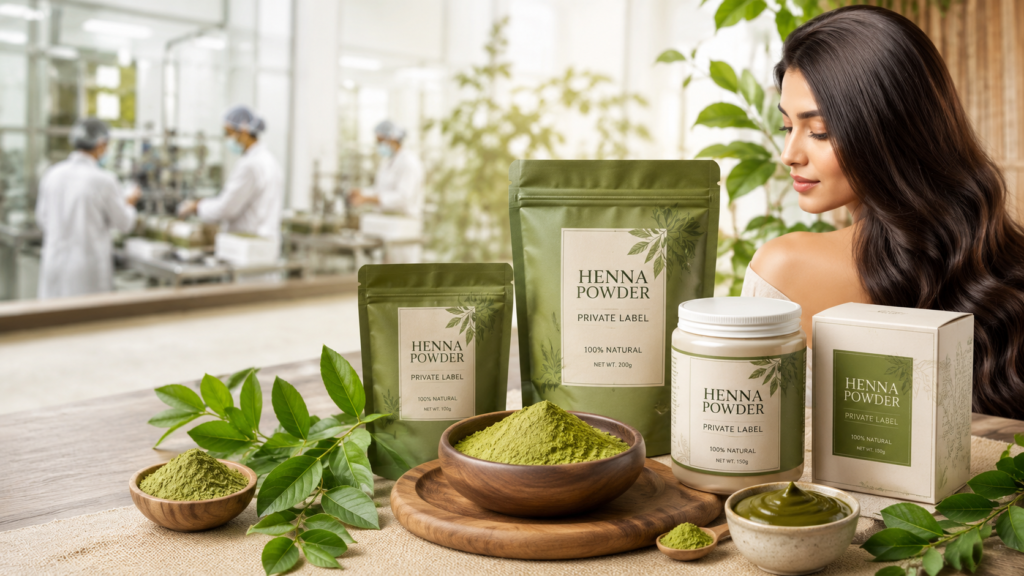
Beauty and haircare customers are reading labels more carefully now. They want clean color, familiar botanicals, and products they feel comfortable using regularly. For a brand owner, that creates a real challenge: the product has to look good on the shelf, but it also has to perform the same way after every reorder. This is where Private label henna powder manufacturers become valuable, especially for brands that need steady quality, practical packaging options, and a product customers can come back to with confidence.
A reliable supplier can make a big difference when choosing the right beauty brand henna powder for your product range. For more information about sourcing and private label henna products, you can explore Taj Henna and its range of henna solutions.
What Beauty Brands Expect from Private Label Henna Powder Manufacturers
Beauty brands usually approach henna with a simple goal: create a trustworthy natural color or care product. The work behind that goal is less simple. A brand may need fine powder for smooth paste, a deep natural stain for body art, a reliable reddish-brown tone for hair, or a blend that works with herbs such as amla, indigo, bhringraj, brahmi, reetha, or shikakai.
Good Private label henna powder manufacturers help brands match these expectations before bulk production begins. They should be able to discuss the grade of henna, filtration level, raw material quality, packaging format, and intended use. Haircare brands, salon suppliers, ecommerce sellers, and natural beauty startups have different needs, so one standard product rarely fits everyone. For brands comparing suppliers, this detailed guide on Organic henna powder manufacturers explains what to check before placing a bulk order.
A thoughtful private label henna supplier will also ask practical questions about jars, pouches, cartons, salon-size packs, export requirements, and intended use.
Why Source and Processing Matter
Henna is an agricultural product, so quality begins long before manufacturing. Leaf maturity, drying conditions, storage, and cleaning all influence the final powder. A dull, gritty, or weak product can damage customer trust even with premium branding.
For beauty brands, consistency is the real test. A shopper who likes the first pouch expects the next one to behave the same way. That means the manufacturer must control raw material selection, grinding, sifting, and batch handling. Taj Henna highlights its experience with natural henna, body art quality powder, herbal powders, and products made without chemicals, which fits the clean beauty direction many buyers now prefer.
How Private Label Henna Powder Manufacturers Support Product Quality
Product quality is not only about color payoff. It includes texture, purity, freshness, packing strength, shelf life, and how the powder behaves when mixed. For haircare, buyers want smooth paste application, manageable rinse-out, shine, and a natural-looking shade. For body art, they want fine texture and easy cone filling.
Reliable Private label henna powder manufacturers should have checks at different stages rather than relying only on the final product. Taj Henna mentions experienced staff, advanced manufacturing techniques, in-process testing, microbiology laboratory support, and a total quality management approach. For a private label brand, those details matter because quality issues become expensive after the goods are already packed, shipped, and listed online.
A cosmetic henna manufacturer should also understand that beauty products carry emotional value. Customers apply them to hair, scalp, hands, or skin before important occasions. A disappointing batch is not just a return request; it may become a negative review or a lost customer.
Packaging Choices That Shape the Brand Experience
Packaging is one of those details brands sometimes leave for later, but with henna, it can affect the way people judge the product almost immediately. A customer picking up a pouch wants it to feel clean, fresh, and properly sealed. If the pack looks flimsy or the label feels unclear, they may start doubting the powder before they have even mixed it.
For brands working with Taj Henna, the choice is not limited to one standard format. Larger orders can be packed in 20 kg, 25 kg, and 50 kg LDPE bags, while smaller consumer packs can be customized for retail, salon, or online sales. That matters because every channel has its own habits. A salon owner may care more about storage, easy handling, and consistent reordering. A D2C haircare brand may care about how the pouch photographs, whether the label explains usage clearly, and whether the pack can sit well on a bathroom shelf.
Good henna powder packaging should also protect the powder after it leaves the factory. Henna is still a natural plant-based product, so heat, moisture, and rough handling can affect how fresh it feels by the time it reaches the customer. For export buyers, strong outer cartons, proper sealing, batch details, and practical pack sizes can make a real difference. These are not glamorous details, but they are often the reason one brand gets fewer complaints than another.
Bulk Orders, Sampling, and Brand Scale
Most serious beauty brands do not jump straight into a large order. They test first, and they should. A sample batch gives the team a chance to see how finely the powder is sifted, how it mixes with water, how the henna paste feels during application, and how customers respond after use. Before placing an order for bulk private label henna, it is worth trying the product in the same way your buyers will use it.
For example, a salon-focused brand may test it with stylists who use henna every week. An online brand may send trial packs to repeat customers and ask about texture, color release, smell, rinsing, and overall comfort. Those small details are often more useful than a technical description on paper.
Once the product feels right, scaling becomes much less risky. A brand can begin with pure henna powder, then later introduce indigo, amla, herbal blends, or larger professional-use packs. The goal is not to launch everything at once. It is to build a range that customers can trust order after order.
Private label work should also include realistic planning. A brand may start with one SKU, such as pure henna powder for hair, then later add indigo, amla, bridal cones, herbal blends, or salon packs. Taj Henna’s product range across natural henna powder, herbal powders, hair colors, skin care, and essential oils gives brand owners room to think beyond a single launch.
Questions to Ask Private Label Henna Powder Manufacturers Before Ordering
A professional buyer should never select a partner on price alone. Lower rates can look attractive, but hidden compromises often appear in texture, freshness, packing, or delivery timelines. Before confirming production, ask clear questions:
Raw Material and Product Grade
Ask where the leaves are sourced, how the powder is filtered, and whether the grade suits hair, body art, or both. For premium haircare, a fine and smooth powder usually gives a better user experience.
Packing, MOQ, and Customization
Clarify the minimum order quantity, available pack sizes, artwork requirements, label support, and dispatch timelines. A manufacturer who can handle customized packing makes scaling easier because the brand does not need to coordinate too many vendors.
Testing and Documentation
Ask what checks are followed during production and before dispatch. For export or retail, documentation can become just as important as the product itself. Batch details, shelf life, ingredient clarity, and storage advice help brands answer buyer questions confidently. For businesses looking for reliable sourcing options, choosing experienced Private label henna powder manufacturers can also make it easier to maintain consistent product quality and clear documentation.
Building a Henna Brand Customers Trust
Successful henna brand manufacturing is not only about placing a logo on a pouch. It is about creating a product people can use with confidence. Beauty buyers notice texture, smell, stain, shine, and whether the product feels gentle. They also notice clear directions, honest claims, and packaging that does not exaggerate results.
Conclusion
Choosing a manufacturing partner is one of the quiet decisions that shapes a beauty brand’s reputation. The customer may only see the pouch, label, color, and final result, but behind that product are choices about leaf quality, filtration, testing, packing, and delivery. Taj Henna has useful strengths for this space: natural henna experience, Sojat roots, customized private labeling, bulk capability, and quality-focused infrastructure. For a brand owner, the goal should be to build something repeatable, not just something attractive for a first launch. Ask for samples, discuss the intended use honestly, and look closely at how the supplier handles consistency. The best Private label henna powder manufacturers make the process feel practical, transparent, and brand-friendly from the first conversation to every reorder, which is exactly what growing beauty and haircare labels need when customers begin asking for the same dependable result again.