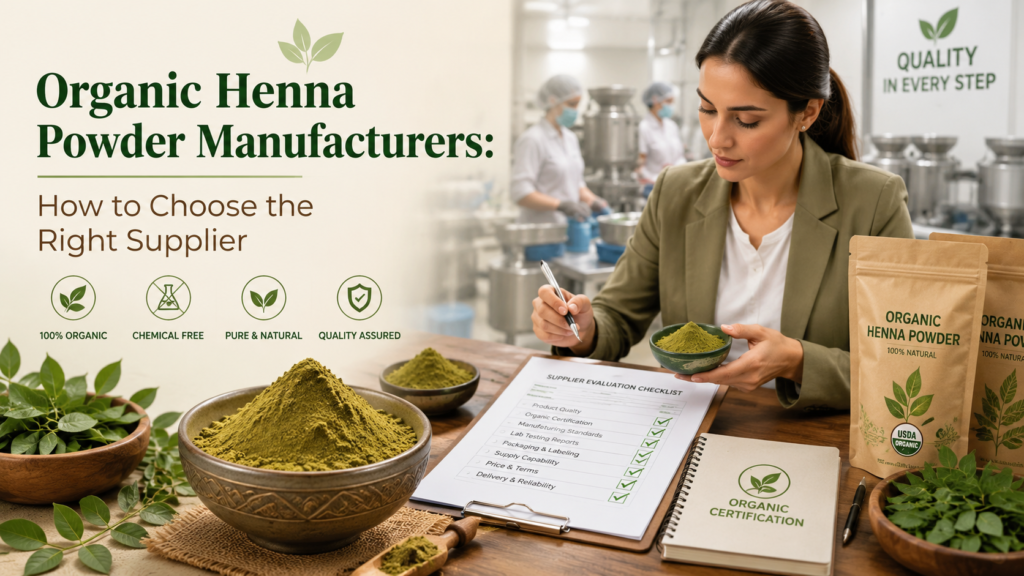
Choosing a henna supplier looks simple: find a price, ask for a sample, and place the order. In practice, henna is sensitive to farming, leaf maturity, drying, grinding, sieving, storage, and packing. A beautiful stain or hair color depends on each step.
The best Organic henna powder manufacturers understand this chain. They know buyers care about freshness, fine texture, shade consistency, and honest communication.
Why Organic henna powder manufacturers Need Careful Evaluation
Poorly processed henna may look acceptable in a bag, but problems appear during mixing, application, staining, or customer feedback. Coarse powder can clog cones. Old stock may give weak color. Poor packing may allow moisture to affect aroma and performance.
Experienced Organic henna powder manufacturers usually have clear systems for raw material selection, cleaning, grinding, filtering, testing, packing, and dispatch. You are not only buying leaves in powdered form; you are buying process control. This matters for bulk orders because one inconsistent batch can affect hundreds of retail packs.
Start with the Source of the Henna Leaves
Good henna begins in the field. Ask where the leaves are sourced, how they are selected, and whether the supplier works closely with growers. Henna from established growing belts often has a stronger reputation because farmers and processors understand the crop well.
Fresh, mature leaves usually support better dye release than poorly handled or mixed-grade material. A serious organic henna powder supplier should explain sourcing in plain language. You do not need dramatic promises; you need clarity. If the answer sounds vague, rushed, or overly promotional, keep asking questions.
Check Purity Before You Discuss Price
Price matters, especially for bulk buyers, but purity should come first. Ask whether the product contains only henna leaf powder. Confirm that it is free from synthetic dyes, metallic salts, artificial fragrance, and unnecessary fillers.
The label chemical free henna powder is meaningful only when the supplier can support it with consistent manufacturing practices. Request samples from the same grade you plan to buy, not a special sample prepared only for approval. Mix it yourself, then check aroma, paste smoothness, color release, and residue after washing.
Understand Processing and Filtration
Processing affects how henna feels in the hands of the final user. For body art, a fine and well-filtered powder helps create smooth paste and clean cone flow. For hair care, even texture helps with easier mixing and application.
Natural henna powder should have an earthy, plant-like aroma and a fresh greenish tone, though color can vary depending on harvest and storage. Do not judge only by brightness. Some powders are made to look attractive but may not perform well. A dependable supplier will explain grinding, sieving, and filtration honestly.
Why Triple-Filtered Grades Matter
Triple-filtered or body-art-quality grades are often preferred by artists because they reduce clogging and improve paste consistency. For retail hair-care packs, filtration still matters because customers notice comfort, spreadability, and rinse-out experience. Ask which grade suits your use case; a professional supplier should guide you rather than pushing one product for every buyer.
Quality Checks Organic henna powder manufacturers Should Welcome
Strong suppliers do not become defensive when you ask about quality. Before committing to a large order, discuss batch consistency, moisture control, microbial testing, mesh size, storage, and packing standards. If you sell under your own label, ask about documentation needed for your market.
Create a simple test routine. Mix every sample with the same liquid, resting time, and application method. Compare stain development after a fixed number of hours. For hair, test on collected hair strands if possible. This protects you from choosing based only on photographs or claims.
Packaging, Shelf Life, and Bulk Handling
Henna dislikes moisture, heat, and careless storage. Even a good product can lose freshness if packing is weak.If you are buying wholesale henna powder, If you are buying wholesale henna powder, ask whether the supplier offers air-tight, moisture-resistant packaging, bulk cartons, private-label pouches, or customized pack sizes.
The right pure henna powder manufacturer will also discuss shelf life honestly. Be cautious if a supplier promises unrealistic freshness without explaining storage conditions. In real business, buyers need practical guidance: how to store cartons, rotate stock, and protect opened packs.
Certifications, Documentation, and Transparency
Certificates can be useful, but they should not be treated as decoration. Ask which certificates apply to the product, facility, or process. If you need export support, clarify whether the supplier can provide invoices, packing lists, product specifications, and any required test reports.
A herbal henna powder manufacturer may also handle amla, indigo, shikakai, reetha, neem, or other plant powders. That can be helpful if you want a broader herbal hair-care range, but it also means you should ask about separate handling, cleanliness, and inventory control. When expanding your herbal product range, working with a reliable supplier can make it easier to source different plant-based powders under your own brand. For businesses looking for customised packaging and branding options, you can explore Private label henna powder manufacturers for more information.
Questions to Ask Organic henna powder manufacturers Before Ordering
Prepare a short checklist before you contact suppliers. It keeps conversations focused and helps you compare replies fairly.
Sourcing Questions
Where do you source your henna leaves? Do you work directly with farmers or traders? How do you select leaf quality and maintain the same grade for repeat orders?
Production Questions
What grinding and filtration process do you use? Which mesh size is available? Do you offer body-art-quality or triple-filtered grades? How do you control moisture?
Business Questions
What is your minimum order quantity? Can you support private labeling? How do you pack bulk shipments? What is the usual dispatch timeline? Can you share samples from current stock?
Compare Communication, Not Just Product
A supplier’s communication style tells you a lot. Do they answer clearly? Do they understand your market? Do they ask how you plan to use the product? Do they explain limitations as well as strengths?
For example, a bridal mehndi artist may care most about fine filtering and stain depth.A hair-care brand may care about easy rinsing, scalp comfort, and choosing organic henna for hair color that gives realistic warmth without harsh dye routines. An exporter may care about documentation, packing, and shipment planning. Good suppliers adapt the discussion to the buyer’s real need.
Red Flags You Should Not Ignore
Walk away from suppliers who avoid sample requests, refuse basic documentation, make exaggerated claims, or offer prices that seem far below the market without explanation. If every question is answered with “best quality,” you still do not have useful information. Many buyers receive a good first sample, then struggle with delayed replies, unclear packing details, or changing prices. The goal is to find a supplier who can support repeated business calmly.
Conclusion
Choosing a henna supplier becomes easier when you slow the process down and look beyond the sample packet. Check where the leaves come from, how the powder is processed, how openly the supplier answers questions, and whether their packing can protect freshness during storage and transport. Good Organic henna powder manufacturers will not rush you with vague claims; they will help you understand grades, testing, documentation, lead times, and realistic results. For buyers building a retail brand, salon range, export line, or body-art business, that kind of honesty is worth more than a small discount. Start with samples, compare them under the same conditions, and keep notes from every test. The right supplier should feel steady, transparent, and practical from the first conversation to repeat orders, with enough consistency to support your customers as your business grows in real markets.