Coloring hair can feel like a small beauty decision until dryness, sharp salon smells, or a sensitive hairline make the routine worth reconsidering. Henna appeals because it offers a slower, more ingredient-conscious path. Used well, it can leave hair looking warmer, glossier, and more dimensional without suggesting every result will look identical.
Henna is not one interchangeable product. Leaf quality, milling, storage, and formulation affect how smoothly the paste mixes and how predictable the finish feels. That is why working with an organic henna manufacturer in India can matter for home users and brands alike.
Why plant-based coloring appeals to careful buyers
People who step away from conventional dyes often want fewer harsh-smelling routines, clearer ingredient lists, and color choices that feel easier to understand. Henna suits that mindset. It does not bleach hair or create dramatic lightening. Instead, it adds translucent warm pigment that blends with the existing base shade.
On dark brown or black hair, the result may appear as a reddish glow in sunlight rather than a major transformation. On lighter brown, gray, or untreated strands, the warmth can be more visible. That nuance matters. Henna works best for readers who value realistic expectations, a strand test, and patience.
Some shoppers use the phrase chemical free hair color to describe what they want, often looking for a trusted chemical free mehndi manufacturer that focuses on cleaner ingredient practices. In beauty conversations, the phrase usually signals a wish to avoid aggressive dye systems and choose a simpler, plant-focused routine.
What makes henna different from conventional dye
Permanent dye often relies on oxidation to open the cuticle and change pigment within the strand. Henna behaves differently. Its dye molecule, lawsone, binds with keratin and creates a translucent stain around the hair. Because the original shade still contributes to the final look, the effect usually feels more layered than flat.
That also explains why henna is not the right route for cool blonde, ash brown, or instant dramatic lift. It is better suited to copper, auburn, red-brown, and richer-looking warmth. The tone can deepen after rinsing as the stain settles.
For readers comparing options, herbal hair color is often used as a broad category. Henna belongs in that conversation, but quality still varies. A fresh crop and an honest ingredient panel matter far more than rustic packaging. When sourcing quality henna products, checking the origin and supplier standards can help buyers make a more informed choice. For businesses looking to source directly, exploring options for henna powder import from India can be a useful next step.
How the powder itself changes the experience
Fresh, finely sifted BAQ triple filtered henna powder usually creates a smoother paste, spreads more easily, and rinses out with less frustration. Coarse or stale powder may feel gritty, clump in the bowl, and lead to uneven application. An organic henna manufacturer that takes harvest timing, drying conditions, and milling seriously can make real use easier.
Color release matters too. A well-prepared product should develop its stain predictably when mixed as directed. That consistency helps beginners feel less intimidated and gives regular users better repeat results.
Reading labels without getting lost in marketing
Henna buyers often see confident phrases on boxes: pure, premium, ayurvedic, salon quality. Some claims are useful; others are decorative. The ingredient panel remains the best starting point. If the product is sold as henna, Lawsonia inermis should be central, and the label should not bury unnecessary extras behind vague wording.
The term natural hair dye henna may appear in search results or product descriptions, but the actual formula tells the fuller story. Blends with other plants can still be legitimate, especially when they are designed to shift tone, yet those additions should be clearly explained.
A trustworthy organic henna manufacturer should also provide practical guidance: mixing basics, expected color family, storage advice, and realistic use notes. A careful organic henna manufacturer builds trust by being clear rather than dramatic. You can learn more about henna powder manufacturing and explore related henna products.
Red flags worth noticing
Be cautious with any product that promises jet-black henna without explaining the blend, claims a dramatic shift in a rushed single step, or skips a complete ingredient list. A strong synthetic smell from a supposedly botanical powder also deserves scrutiny.
Sellers recommend strand testing because porosity, gray percentage, past coloring, and application thickness all influence the outcome.
What to expect when using henna at home
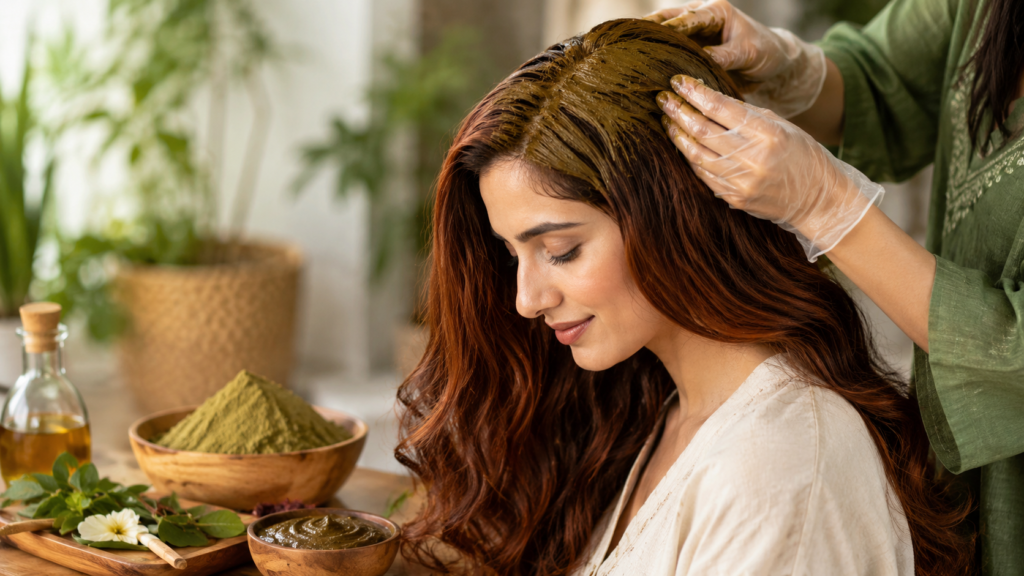
For users who prefer convenience, ready-to-use henna paste options can simplify preparation without changing the traditional application process. The process often includes mixing the powder into a yogurt-like paste, resting it if directions call for dye release, sectioning hair, applying thoroughly, and covering it while the pigment develops.
The first application teaches a lot. Dense, waist-length hair may need more paste than expected. Resistant gray around the temples may need extra saturation. These observations make the next session easier.
Henna powder for hair should be treated as a craft product, not a one-click promise. Careful preparation usually creates better-looking results than last-minute improvising.
A practical first-use routine
Start with clean hair that is free from heavy oils or styling residue. Prepare the paste exactly as directed. Wear gloves, protect the hairline, and work in sections so every area receives enough product. After processing, rinse patiently with water before deciding whether a gentle cleanser is needed.
Fresh color can evolve after rinsing, so avoid judging the result too quickly. Many users notice that the shade looks brighter at first and settles into a slightly deeper tone within about 24 to 48 hours.
An organic henna manufacturer that gives clear directions reduces guesswork and helps beginners avoid common application mistakes.
Matching henna to real hair goals
Henna is not for every color objective, and saying that plainly helps readers choose well. It is especially appealing for people who enjoy warm tones, want visible shine, or prefer a color routine that feels less harsh. It can be a thoughtful option for scattered grays or dull brown hair that needs richer warmth.
It may be less suitable for someone who frequently changes color, wants icy tones, or plans to move quickly between very light and very dark shades. Previous color history matters too. A strand test can show whether the outcome feels harmonious before a full application.
For brands, stylists, and private-label buyers, partnering with an organic henna manufacturer is not only about sourcing powder. It is about offering a product that behaves consistently enough to earn repeat trust.
Conclusion
Henna appeals because it treats hair color as a more considered choice. It works with the hair you already have, adding warmth, depth, and a polished finish without chasing unrealistic instant transformations. The best results come from understanding its character: strand test first, expect shade variation, apply generously, and give the color time to settle after rinsing.
Quality matters just as much as technique. A thoughtful organic henna manufacturer can support a better experience through clean sourcing, fine milling, practical directions, and realistic product guidance. That kind of care helps beginners and repeat users feel more confident from the first mix to the final rinse. For anyone drawn to warmer tones, visible softness, and a slower, more intentional routine, henna remains a practical, time-tested option that feels grounded rather than fussy, especially for people who appreciate gradual, character-rich cosmetic changes.