Hair color clients are asking better questions now. They still want shine, richness, and grey blending, but they also want to know what is touching their scalp and why a product deserves their trust. That shift has opened a useful space for salons and haircare brands that want cleaner, simpler color stories.
For many professional buyers, chemical free henna powder offers a familiar botanical option with strong consumer appeal. It suits clients who are cautious about strong odors, complicated formulas, or harsh-feeling color services. It also gives brands a product story that feels rooted in tradition, not manufactured around a passing trend.
Many buyers who choose natural hair coloring solutions also look for ready-to-use herbal applications that simplify salon services and home use. Products such as Henna Paste provide the convenience of pre-prepared henna while maintaining the traditional appeal that consumers value. Businesses looking to expand their natural hair care range can explore different henna-based solutions that align with the growing demand for plant-based beauty products.
Why Chemical Free Henna Powder Fits Modern Haircare
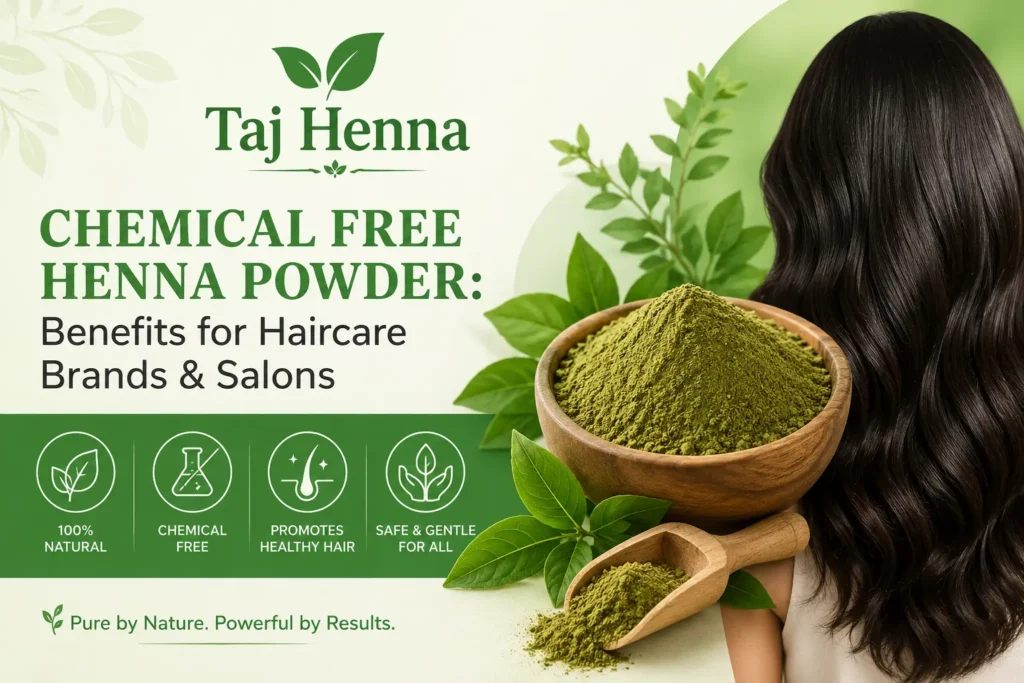
Chemical free henna powder is made from dried henna leaves that are cleaned, milled, and packed for cosmetic use. Rather than forcing a dramatic structural change in the hair, henna deposits warm plant pigment and leaves a coated, conditioned feel. That makes the result different from conventional dye, and professionals should explain that difference clearly.
This clarity is especially valuable in salons. A stylist can describe the service as a slower, more natural-looking color ritual, not a quick fix for every shade request. On lighter hair or grey strands, the copper tone can appear more visible.
For brands, this honesty builds trust. A customer buying a natural hair color henna product online needs realistic expectations before checkout. Shade charts, strand-test advice, and clear before-and-after examples help reduce confusion and make the product feel more professional.
Key Benefits for Salons
A Thoughtful Option for Sensitive Clients
Many clients arrive with concerns about scalp comfort, previous irritation, pregnancy-safe routines, or ingredient overload. Chemical free henna powder gives salons another option to discuss, provided patch testing and medical caution are handled responsibly.
The consultation matters as much as the application. Stylists should ask about previous dye, bleaching, relaxing, allergies, and upcoming chemical services. Henna is best introduced with care, not as a casual add-on. That slower approach often strengthens client confidence because the stylist is guiding the choice instead of overselling it.
A Strong Fit for Wellness-Led Menus
Salons offering scalp treatments, low-tox services, Ayurvedic-inspired rituals, or botanical masks can position chemical free henna powder as part of a broader care experience. The value is not only color. Clients are paying for preparation, education, careful application, and aftercare advice.
A salon can also create helpful retail follow-through. After a service, clients may need guidance on mild shampoo, heat styling, oiling, and repeat application timing. Clear guidance can prevent common mistakes, such as uneven mixing or expecting one session to cover every grey hair fully.
Why Haircare Brands Should Consider It
Haircare shelves are crowded with glosses, toners, root sprays, and permanent dyes. Chemical free henna powder gives a brand a different lane: plant-based color with a slower, more ritual-focused feel. This is useful for shoppers who want beauty products that sound understandable and feel less processed.
Packaging should support the promise. If a brand uses the term herbal henna powder, it should explain sourcing, milling quality, testing, and whether the powder is free from metallic salts or added color boosters. Specific details carry more weight than broad clean-beauty language.
The same applies to claims such as ammonia free henna. It is accurate to explain that henna does not rely on ammonia in the way many conventional dyes do, but brands should not imply identical performance. Henna behaves differently. It offers warmth, shine, and gradual blending, not every possible salon shade.
Quality Markers Buyers Should Check
Not all henna powders are equal. A professional buyer should review appearance, scent, texture, testing records, and supplier transparency. Fresh powder often has a greenish tone and an earthy, grassy smell. Very dull or stale powder may give weaker results.
Fine milling is another practical detail. A smooth powder mixes into a creamier paste, spreads more evenly, and rinses with less frustration. Coarse powder can create patchy application and make the service feel messy for stylists and clients.
Documentation is essential for brands and salons. Ask about pesticide testing, microbial safety, heavy metal screening, and ingredient purity. A supplier offering pure henna for hair should be able to answer direct questions without vague reassurance.
How Salons Can Introduce Chemical Free Henna Powder
The easiest launch is education-led. Train stylists to explain who the service suits, who needs extra caution, and why a strand test matters. Clients with bleached hair, unknown dye history, or very cool-tone goals may not be ideal without careful testing.
Menu descriptions should use plain language. Instead of promising instant full coverage or any shade on demand, describe warm tone enhancement, shine, softness, and natural-looking grey blending over time. That wording attracts the right client.
Salons can also photograph real results under consistent lighting. Chemical free henna powder performs best as a trusted professional service when expectations are practical from the first conversation. For salons looking to offer plant-based hair care solutions, choosing high-quality Natural Henna Powder is essential. Premium-grade henna helps deliver more consistent color results, better conditioning benefits, and improved client satisfaction. Explore our range of Natural Henna Powder to find professional-quality options suitable for salon treatments and natural hair coloring services.
Brand Content and Packaging Tips
Customers buying online need reassurance before they mix anything at home. Clear instructions should cover water temperature, paste texture, processing time, patch testing, strand testing, rinsing, and storage. A short troubleshooting section can answer common concerns about dryness, uneven color, or brightness on grey strands.
Visual content should be honest. Show results across hair types, including subtle outcomes. For traditional beauty audiences, brands may mention cultural familiarity carefully, while keeping hair-use instructions separate from body-art associations such as chemical free mehndi. Respectful clarity avoids confusion and keeps the product story focused.
Conclusion
For salons and haircare brands, plant-based color works best when it is presented with warmth, clarity, and practical honesty. Chemical free henna powder gives professionals a recognizable story to share, but the strongest results come from education, not hype. Clients should understand that henna creates tonal warmth, shine, and gradual blending rather than identical results on every head of hair. Brands can support that message with careful sourcing, clean processing, safety testing, and instructions that respect the customer’s time. Salons can turn the service into a thoughtful consultation, especially for people who feel nervous about conventional color. Used carefully, henna helps businesses serve ingredient-conscious clients while keeping expectations realistic. That balance is what turns a simple plant powder into a dependable professional offering. For buyers, this transparency can become a quiet but powerful reason to return again and again with confidence.