India has long been known as a global hub for henna production, thanks to its favorable climate and deep-rooted agricultural traditions. However, despite its strong reputation, every organic henna production manufacturer india faces a unique set of challenges that impact growth, quality, and scalability.
From sourcing raw materials to maintaining consistent product quality, manufacturers must navigate a complex ecosystem. While demand for organic and chemical-free henna continues to rise both domestically and internationally, meeting these expectations is not always straightforward.
Let’s explore the key obstacles that organic henna manufacturers encounter and how they influence the industry as a whole.For a deeper understanding of industry practices, you can also explore this detailed guide on herbal henna manufacturing
Raw Material Sourcing and Quality Inconsistency
Dependence on Seasonal Farming
Henna is an agricultural product, and its availability heavily depends on seasonal cycles. Climate variations, unpredictable rainfall, and soil conditions can significantly affect crop yield and quality. This creates uncertainty for manufacturers who rely on consistent supply.
For businesses working with a raw material henna supplier india, fluctuations in leaf quality can lead to inconsistent dye strength and product performance. This inconsistency makes it challenging to maintain brand trust, especially in competitive export markets.
Limited Control Over Farming Practices
Many manufacturers do not own farms and depend on third-party growers. This lack of control can result in variations in cultivation practices, including the use of pesticides or improper harvesting techniques. Maintaining organic certification under such conditions becomes a demanding task for any organic henna production manufacturer india.
Supply Chain and Logistics Issues
Fragmented Distribution Network
The supply chain for henna involves multiple stakeholders, including farmers, processors, distributors, and exporters. Coordination between these players is often fragmented, leading to delays and inefficiencies.
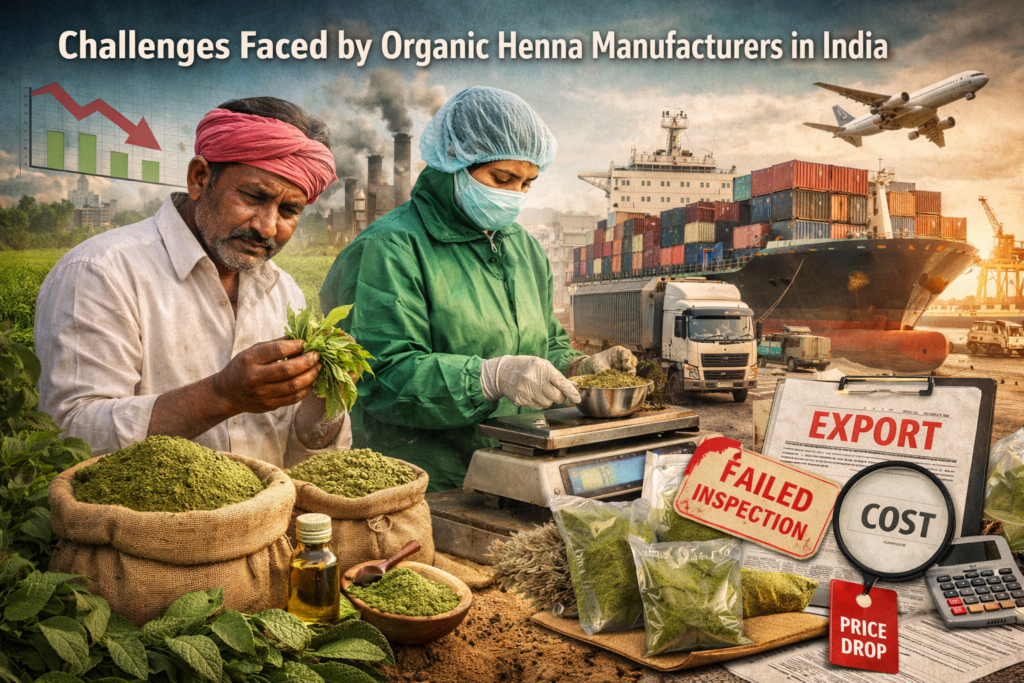
For a henna farming supplier india, transporting fresh leaves without compromising quality is a significant challenge. Poor infrastructure in rural areas further complicates logistics, increasing the risk of spoilage.
Export Compliance and Regulations
Exporting organic henna requires adherence to strict international standards. Certifications, documentation, and compliance checks can be time-consuming and costly. Even minor errors can result in shipment delays or rejections, creating additional pressure for an organic henna production manufacturer india.
Maintaining Organic Certification Standards
Strict Compliance Requirements
Organic certification demands adherence to rigorous standards throughout the production process. From farming to packaging, every step must meet specific guidelines.
For any organic henna production manufacturer india, ensuring compliance involves regular audits, documentation, and monitoring. This not only increases operational costs but also requires dedicated resources.
Risk of Contamination
Cross-contamination with non-organic materials can lead to certification loss. Maintaining separate processing facilities and strict hygiene protocols is essential but can be difficult, especially for smaller manufacturers.
Rising Competition in the Market
Increasing Number of Suppliers
The growing demand for organic henna has led to a surge in new entrants. While this expands the market, it also intensifies competition.
Businesses operating as an organic mehndi bulk supplier india often face pricing pressure. Competing solely on cost can compromise quality, making it difficult to strike the right balance between affordability and premium standards.
Brand Differentiation Challenges
With many players offering similar products, standing out becomes a challenge. Manufacturers must invest in branding, packaging, and marketing to differentiate themselves in a crowded marketplace.
Quality Control and Standardization
Variability in Product Output
Henna quality can vary based on factors such as leaf maturity, processing techniques, and storage conditions. Achieving uniformity across batches is a constant struggle.
For a organic henna production manufacturer india, maintaining consistent color payoff and texture is crucial for customer satisfaction. Even slight variations can lead to negative feedback and reduced repeat business.
Lack of Advanced Processing Technology
Many manufacturers still rely on traditional processing methods. While these methods preserve authenticity, they may not always ensure consistency or efficiency. Investing in modern technology requires significant capital, which may not be feasible for all businesses.
Pricing Pressures and Cost Management
Fluctuating Raw Material Costs
The cost of henna leaves can vary due to seasonal availability and market demand. This unpredictability makes pricing strategies difficult to manage.
Manufacturers often struggle to maintain profit margins while offering competitive prices. This challenge is particularly significant for export-oriented businesses.
Balancing Quality and Affordability
Customers expect high-quality organic products at reasonable prices. Meeting these expectations without compromising on standards requires careful cost management and strategic planning.
Limited Awareness and Market Education
Consumer Misconceptions
Many consumers are unaware of the differences between organic and conventional henna. This lack of awareness can lead to unrealistic expectations regarding pricing and performance.
Educating customers about the benefits of organic henna powder is essential but requires consistent effort and investment in marketing.
Building Trust in Global Markets
Establishing credibility in international markets takes time. Manufacturers must demonstrate reliability, quality, and compliance to build long-term relationships with buyers.
Environmental and Sustainability Concerns
Water Usage and Resource Management
Henna cultivation requires water and other natural resources. Sustainable farming practices are essential to minimize environmental impact.
Manufacturers must work closely with farmers to promote eco-friendly methods. This collaboration is crucial for maintaining long-term sustainability.
Waste Management Challenges
Processing henna generates waste, including leaf residue and packaging materials. Proper disposal and recycling practices are necessary to reduce environmental impact, but implementing these systems can be challenging.
Conclusion
The organic henna industry in India holds immense potential, but it is not without its hurdles. From sourcing high-quality raw materials to maintaining strict certification standards, manufacturers must navigate a complex landscape. Additionally, henna manufacturing challenges india supplier concerns, along with fluctuations in wholesale henna powder demand, supply chain inefficiencies, rising competition, and the need for consistent product quality, further add to the difficulties businesses face.
Despite these obstacles, businesses that invest in sustainable practices, modern technology, and strong supplier relationships can create a competitive edge. Educating consumers and building trust in both domestic and international markets also plays a vital role in long-term success. For any organic henna production manufacturer india, the key lies in balancing tradition with innovation while staying committed to quality and authenticity.