Buying henna in bulk should feel careful, not risky. A weak batch can cause gritty paste, pale stains, customer complaints, and stock that sits unsold. The good news is that pure henna powder quality can be judged before you approve a large order. You need a sample, steady observation, and the patience to test performance instead of trusting a product photo. Treat every sample as a preview of the shipment you may receive.
Why pure henna powder quality Matters Before a Large Order
Henna changes with leaf maturity, drying, grinding, storage, and packing. Price may look attractive, but it does not tell you how the powder will mix, stain, or last on the shelf. For brands, salons, and resellers, consistent pure henna powder quality protects trust. One impressive sample is not enough; the next lot should behave the same way.
Start With Color and Texture
Check the shade in daylight
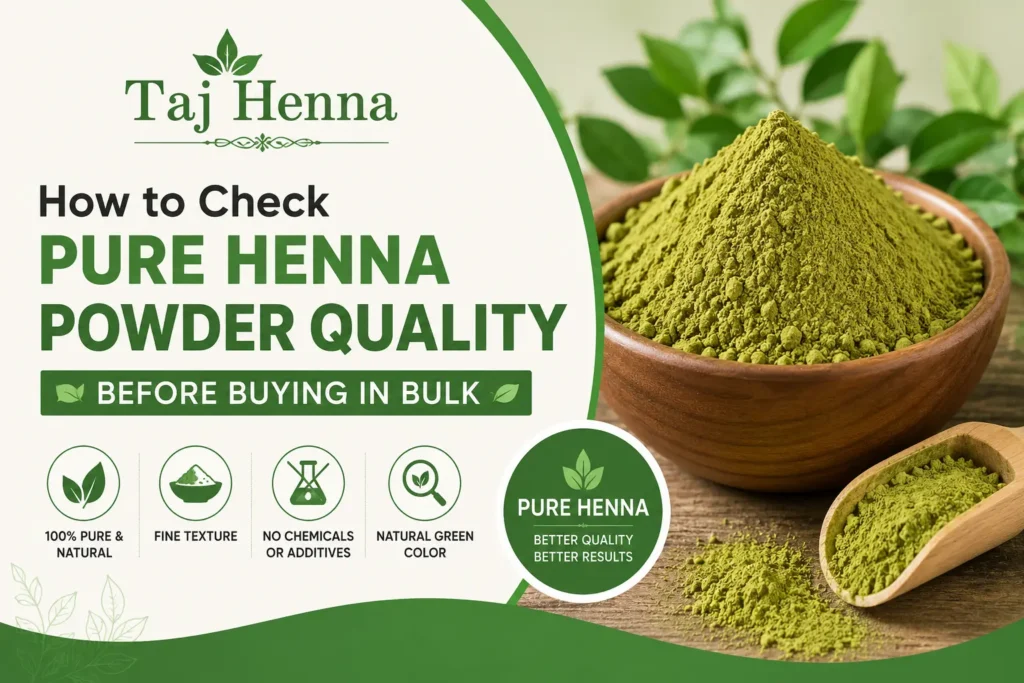
Fresh henna usually has a green to olive-green tone. It should look earthy and plant-like, not neon, grey, or flat brown. Very bright powder may suggest added colorants, while dull powder may be old or poorly stored. A good sample of natural henna powder looks clean without appearing artificial.
Spread a little powder on white paper near a window. Compare samples side by side under the same light. This makes freshness, dustiness, and uneven color easier to notice.
Feel the grind between your fingers
A simple henna powder quality check begins with touch. Rub a pinch between your fingertips. It should feel fine, soft, and evenly milled, without sand-like grit, twig pieces, or sharp particles. Coarse powder is harder to mix and can clog cones or create a rough hair paste.
For extra confidence, mix a spoonful with water. Good powder absorbs liquid smoothly and forms a paste without stubborn lumps.
Use Smell and Moisture as Early Warnings
Freshness and proper processing are especially important when sourcing henna from trusted regions. Working with an experienced Sojat mehndi manufacturer helps ensure that the henna is processed, packed, and stored under controlled conditions to maintain its natural quality and dyeing properties. Learn more about choosing a reliable Sojat mehndi manufacturer for premium-quality henna products.
Fresh henna has a grassy, hay-like, slightly earthy smell. It should not smell perfumed, chemical, smoky, sour, or musty. Artificial fragrance can hide poor storage, while damp odor may mean moisture exposure.
Clumping deserves a closer look. Soft clumps may come from shipping pressure, but hard lumps or damp pockets suggest humidity. Moisture can weaken dye release and shorten shelf life. Before you order, ask how the powder is dried, sealed, and stored. Airtight packing helps protect pure henna powder quality during transport and warehousing.
Use a Trial to Confirm pure henna powder quality
A practical pure henna powder test should copy real use. Mix a small amount with lukewarm water or your usual acidic liquid until it becomes smooth. Cover it and allow dye release. The timing depends on room temperature, but rushing this step often leads to a false judgment.
Apply a little paste to skin or a test strand, then watch the stain over 24 to 48 hours. Henna often starts orange and deepens later. If the stain stays pale, fades quickly, or looks strangely tinted, pause before buying. This trial helps judge pure henna powder quality by actual performance, not supplier claims.
Ask Better Supplier Questions
Reliable suppliers should discuss crop season, origin, drying method, grinding, lot size, and packing date without sounding evasive. Ask whether the powder is made from leaves only, whether lots are blended, and whether your sample comes from the same stock you will receive. For businesses looking for deeper insights, explore this guide on Organic henna powder manufacturers to understand sourcing, production standards, and factors that influence product quality.
For bulk henna quality, request lot-specific details rather than a display sample reserved for marketing. Cosmetic brands may also ask for microbial reports, heavy metal screening, or additive-free declarations. Documents do not replace hands-on testing, but they support a safer decision and provide proof of pure henna powder quality for your records.
Review Packaging Before Payment
Even excellent henna can decline when exposed to heat, light, oxygen, or humidity. Bulk packaging should be clean, airtight, and strong enough for shipping. Smaller sealed units inside a larger carton are often better than one loose sack because you open only what you need.
After delivery, store packs in a cool, dry, dark place. Reseal opened bags tightly and label dates clearly. Good packaging habits preserve pure henna powder quality long after the invoice is paid.
Watch for Red Flags
Be cautious if the powder looks unnaturally bright, smells like perfume or dye, stains too dark too quickly, or comes with unclear ingredient claims. True henna does not create an instant black stain on its own. Very fast black results may suggest unwanted additives.
Also avoid suppliers who refuse samples, dodge lot details, or change explanations repeatedly. A low price cannot repair returns, bad reviews, or damaged customer confidence.
Keep a Buying Checklist
A written checklist keeps sourcing calm and repeatable. Record the supplier name, sample date, color, aroma, texture, mixing behavior, dye-release time, stain result, packaging details, and documents received. Photograph each stage in similar lighting.
Think of this as your working henna powder buyers guide. Over time, your notes will show which suppliers consistently protect pure henna powder quality and which ones only look convincing at first.
Conclusion
Buying henna in large quantities becomes easier when you slow down and follow the same routine every time. Look at the color in daylight, feel the grind, smell for freshness, mix a small paste, and let the stain mature before making a decision. Ask direct supplier questions, request lot details, and treat packaging as part of the quality story, not an afterthought. The best buyers do not chase the lowest price first; they look for consistency, clean handling, and honest communication. With patient checks, you can reduce returns, protect customers, and build a product line you feel proud to sell. In the end, pure henna powder quality is proven through observation, practical testing, and supplier accountability. That small discipline helps you avoid rushed decisions, compare suppliers fairly, and give your team a clear standard for every repeat purchase as orders grow.