Henna may look like a simple green powder, but anyone who has bought henna powder for a salon, beauty label, or export business knows how quickly quality differences show up. One batch stains warmly and rinses well. Another feels gritty, smells flat, or loses strength before customers even open the pouch.
That difference begins long before packing. It starts with the leaf, the drying method, the sift, the storage room, and the number of hands the product passes through. Working with a Henna manufacturer in India gives buyers a clearer view of those details. Instead of buying from a chain of resellers, you can speak with the people who understand the crop, the process, and the practical limits of natural henna.
What a Henna manufacturer in India Actually Controls
A true manufacturing partner is close to the product at every meaningful stage. The team can check raw leaves, remove unwanted matter, manage drying, grind to the required fineness, and pack the powder in a way that protects freshness. That control is hard to replace once henna has already moved through several warehouses.
A reliable Henna manufacturer in India can also explain why two grades may look similar but behave differently. A finer sift may suit body art or brow work, while another grade may be better for hair care blends. Good guidance saves buyers from choosing only by price or color appearance, both of which can be misleading.
Source Knowledge Makes Better Decisions Possible
Henna is agricultural, so it naturally changes with season, soil, harvest timing, and storage. A direct henna manufacturer will usually have a better sense of these shifts than someone handling finished cartons only. That matters when you are planning repeat orders or building a product range that customers expect to perform the same way each time.
This does not mean every batch will be identical. Natural ingredients rarely work that way. The advantage is that variations can be noticed, discussed, and managed before the product reaches your customers.
Freshness Is Easier to Protect at the Source
Fresh henna has a distinct herbal scent, a smooth feel, and dependable dye release when prepared correctly. Weak or tired powder may still look acceptable in a bag, but the performance tells the truth. Customers notice dull color, uneven results, and paste that does not feel pleasant to apply.
A Henna manufacturer in India can shorten the route between production and shipment. Fewer transfers mean fewer chances for heat exposure, moisture damage, or poor handling. That shorter path becomes especially valuable for brands selling in humid regions or shipping across long distances.
Storage and Packing Are Not Small Details
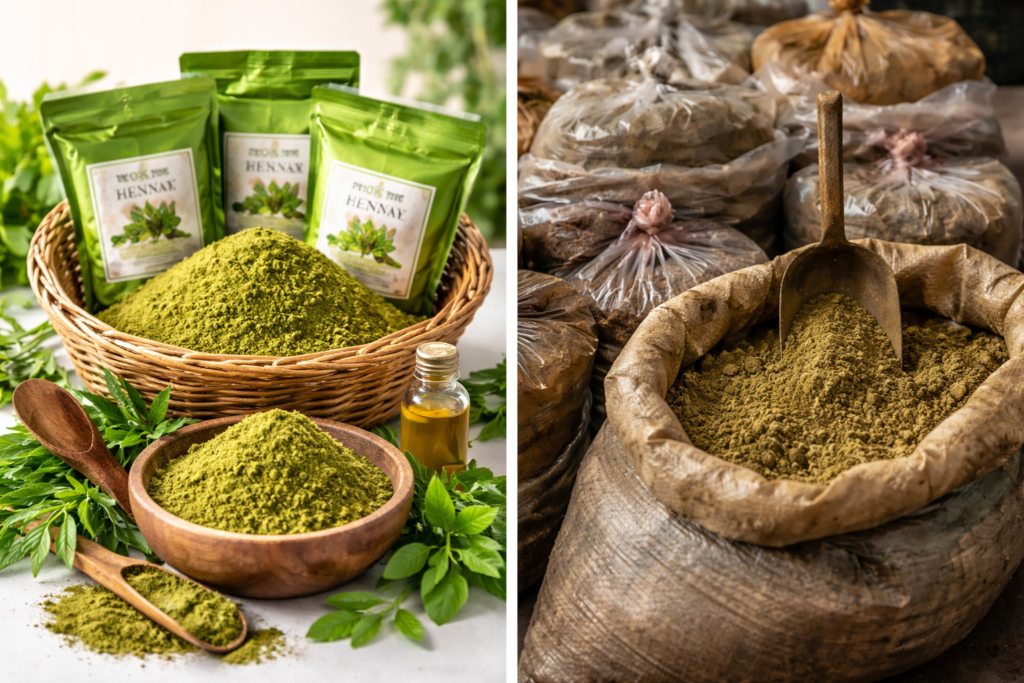
Good henna needs protection from air, light, and dampness. Packaging should suit the final use: retail pouches for beauty shelves, bulk liners for repackers, or sealed cartons for export buyers. The wrong packing can quietly reduce product quality before the first customer tries it.
Because production and packing sit closer together, buyers can ask for practical solutions. Maybe the product needs stronger inner liners. Maybe small pouches need better sealing. Maybe a private label brand needs date coding and carton markings that keep warehouse teams organized. These details are not glamorous, but they prevent many avoidable complaints.
Clearer Pricing Without Guesswork
Price matters, but low pricing can hide trade-offs. A cheaper lot might be older, coarser, less carefully packed, or built around whatever stock was available that week. Direct sourcing helps buyers understand what they are paying for: leaf grade, milling quality, testing, packaging, labeling, documentation, and order volume.
A Henna manufacturer in India can break down these factors more clearly, especially for buyers ordering wholesale henna powder. Instead of judging by rate alone, buyers can compare grade, freshness, packing, documentation, and decide where quality is non-negotiable and where cost can be managed.
Fewer Middle Layers, Faster Answers
Communication can become messy when questions travel through several people. A simple request about current stock, sample freshness, or packaging changes may take days because nobody in the middle has the full answer. Source-level conversations are usually more direct.
The same is true when something goes wrong. If a sample behaves differently from the previous batch, the buyer needs a practical explanation, not vague reassurance. Direct communication makes it easier to compare batch details, review storage conditions, and prevent the same issue from repeating.
Better Support for Private Label and Custom Orders
Beauty brands rarely want only plain powder in a standard sack. They may need custom pouches, ingredient wording, barcode space, multilingual labels, usage directions, bulk cartons, or several grades under one brand family. Those choices affect how the product looks, stores, ships, and sells.
A source-level supplier can help match packaging to real use. Hair henna may need instructions that explain strand testing and mixing. A brow-focused product may need a very fine sift. Export cartons may need stronger structure and clear markings. These are not decorative choices; they shape the user experience.
Quality Claims Need Real Backing
Consumers are more careful now. They read labels, question additives, and compare results online. If a brand claims clean sourcing or natural care, it should be able to support those claims with better supply-chain knowledge. The Best Henna manufacturer in India for your business is the one that helps you make claims responsibly, not the one that simply agrees with every marketing idea.
That honesty protects both sides. It keeps the buyer from overpromising and helps the final customer trust the product over time.
Reducing Risk for Growing Beauty Brands
For a new brand, one weak batch can create outsized damage. Bad reviews, refund requests, and hesitant repeat buyers are expensive. Established brands face a different problem: they need consistency across larger orders and multiple selling channels. In both cases, direct sourcing reduces blind spots.
A Henna manufacturer in India may also help with sample comparison, reorder planning, and product segmentation. You can test a hair grade, a premium grade, and a bulk option before deciding which one fits your audience. That process is slower than grabbing ready stock from a reseller, but it gives a brand better footing.
Testing Should Match Real Customer Use
Lab-style checks are useful, but henna also needs everyday testing. Mix the powder as your customer would. Check paste smoothness, application feel, rinse behavior, aroma, and color development over time. Test it on strands, skin, or sample cards depending on how the customer will use it.
Simple testing prevents a surprising number of problems. It also gives your customer service team better language when buyers ask how to mix, store, or use the product.
Questions to Ask Before Ordering
A good sourcing conversation should feel specific. Ask about leaf origin, current stock age, grind size, moisture control, sample policy, packaging choices, batch marking, export experience, and lead time. If you need private label support, share the expected pack size, artwork stage, and target market early.
A Henna manufacturer in India will not rush past these questions. The right partner understands that a buyer is not just purchasing powder; they are building a product that has to satisfy real people. Good suppliers respect that responsibility.
Signs You Are Speaking with the Right Partner
Clear answers are a good sign. So are realistic timelines, fresh samples, practical packing advice, and a willingness to explain quality differences without making everything sound perfect. Be cautious if every grade is described as premium, every concern is brushed aside, or price is the only conversation.
A dependable supplier talks like someone who has handled the product, not just sold it.
Conclusion
Buying directly from the source is not only about saving a margin. It is about knowing what is inside the pack, how fresh it is, and whether the people behind it can support your brand as it grows. A trusted Henna manufacturer in India gives you better conversations around quality, packing, timelines, and repeat orders. That matters because henna customers judge the product through real use: the smell when they mix it, the feel of the paste, the stain or color after rinsing, and the confidence to buy again. Direct sourcing also makes problems easier to trace and solve. If you are building a beauty line with natural henna, take time to test samples, ask practical questions, and choose a supplier who treats consistency as seriously as you do, over every season, every reorder, and every customer expectation with care.