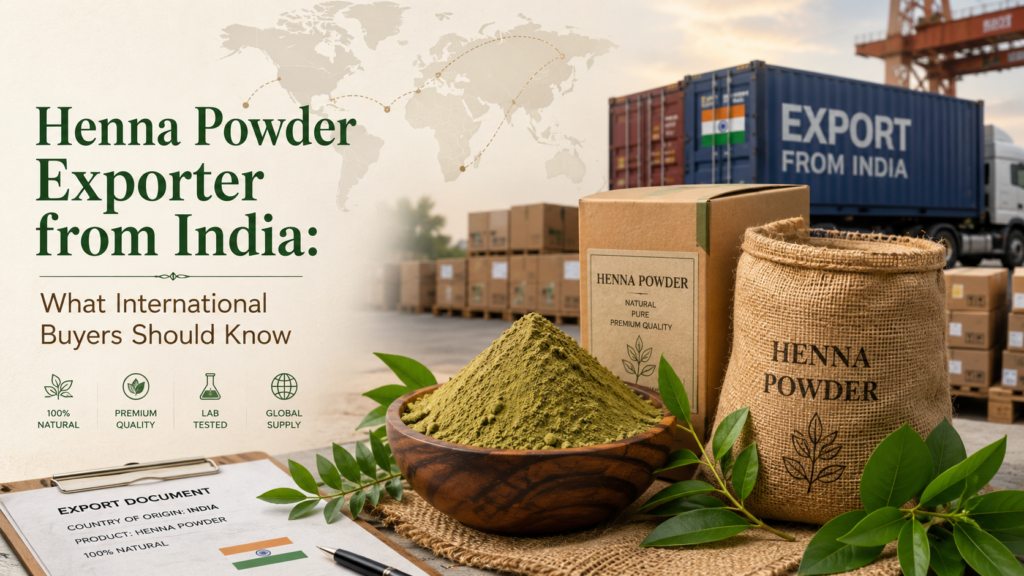
Choosing a Henna powder exporter sounds simple until the first shipment is being planned. Then the questions become very practical. Will the color stay fresh after a long route? Is the powder fine enough for the intended use? Are the labels acceptable for local retailers? Can the supplier repeat the same grade six months later?
Henna is not a factory-made pigment with one fixed character. It comes from leaves, and leaves change with crop, drying, grinding, filtering, and storage. That is why international buyers should look beyond a neat sample photo or a tempting price. The right supplier makes sourcing calmer because the product, paperwork, packing, and communication all move together.
India remains a preferred sourcing base because of its long mehndi tradition and processing clusters. Companies like Taj Henna have helped international buyers access natural henna products with export-ready packaging and large-scale supply support. Still, a salon distributor, private-label brand, body-art seller, and herbal hair-care company may each need a different product experience.
What International Buyers Expect from a Henna powder exporter
A strong supplier should understand how the powder will be used before quoting. Hair-care buyers often care about shade, rinse feel, and customer instructions. Body-art buyers usually want a fine sift, smooth paste, and dependable stain. Retail brands may focus on private label packing, shelf presentation, and documentation.
The better suppliers do not rush this conversation. They ask about destination country, order size, packing format, and intended application. Those questions are not a delay; they show that the supplier is thinking through the order properly.
For buyers searching for henna powder exporter India, region and reputation may help narrow the list, but they should not replace due diligence. Ask how leaves are selected, how the powder is filtered, how finished goods are stored, and whether the same grade can be supplied repeatedly.
Start with the Intended Use, Not Only the Price
Price matters. Importers have margins to protect, freight costs to absorb, and retailers who compare every line item. But henna that disappoints users can cost more than a higher quote. Complaints, returns, relabeling, and lost repeat orders are expensive.
Before discussing a large purchase, define the product clearly. Is it pure henna leaf powder? Is it meant for hair coloring, hand and body art, or a herbal blend? Buyers sourcing herbal hair-color solutions often prefer working with an organic henna manufacturer for hair color that understands export standards and ingredient consistency. Will it be sold in bulk bags, salon packs, or small retail pouches? These answers affect grinding, filtering, packing, labels, and product instructions.
For bulk henna export, consistency is often the biggest concern. One excellent trial batch is useful, but the real test is whether later production behaves in the same way. Importers should ask for a written specification and keep an approved sample for comparison.
Quality Checks That Should Happen Before Shipment
Start with the senses. Fresh henna usually has a greenish-brown tone and earthy smell. If it smells musty, feels gritty, or looks dull, ask questions. The powder should mix smoothly and perform well under the conditions your customers will actually use.
The second check is practical testing. Prepare the product exactly as the end user would. For body art, observe paste smoothness, cone flow, stain development, and drying behavior. For hair, test mixing, application feel, rinse-out, and the final tone after oxidation.
A natural henna powder exporter should be able to discuss purity and explain whether the item is single-ingredient henna or a prepared herbal blend. This distinction matters for labeling and customer trust. Buyers should also ask for batch information, shelf-life guidance, and available lab checks.
Depending on the destination, documentation may include a product specification, certificate of analysis, microbiological test, heavy metal report, certificate of origin, invoice, and packing list. Not every order needs every document, but the supplier should support export shipments professionally.
Packing Can Protect or Ruin a Good Product
Many new buyers spend weeks discussing powder quality and only minutes discussing packaging. That is risky. Henna is sensitive to moisture, odor, heat, and rough handling. Poor packing can turn a good batch into a warehouse headache.
For large orders, inner liners should be sealed well and outer cartons should be strong enough for stacking. For humid regions, moisture protection deserves extra attention. If the product is going into retail, the pouch or box should look clean, carry the right information, and survive normal distribution without powder leakage.
A buyer working with a mehndi powder exporter should ask whether the powder is packed soon after processing and stored in a dry area before dispatch. Small handling decisions matter. Loose sealing, weak cartons, or unclear batch coding can create avoidable trouble once goods reach the importer.
Private Label and Retail Readiness
Private label needs planning. Barcode placement, ingredient declaration, importer details, batch coding, net weight, usage directions, warnings, and country-of-origin statements all need space on the pack.
Ask who is responsible for printing, proofreading, and regulatory wording. If the supplier prints the pack, the buyer should still review every line carefully. Spelling errors, missing details, or vague claims can delay launch. For multilingual markets, leave time for translation and legal review.
How to Shortlist a Henna powder exporter Without Guesswork
The best shortlist uses evidence, not promises. Ask for samples, product specifications, packing photos, available test reports, production capacity, and realistic dispatch timelines. Notice whether the replies are specific. A supplier who answers clearly is usually easier to work with after the order is placed.
A capable henna supplier for export should also be comfortable discussing Incoterms, freight coordination, port details, and document flow. Importers do not need a supplier who says yes to everything. They need one who explains what is possible, what takes time, and where the buyer must confirm local rules.
MOQ, Lead Time, and Long-Term Supply
Minimum order quantity should match your stage of business. A new brand may begin with a modest shipment of wholesale henna powder to check market response. A distributor may need larger monthly volumes. Neither route is wrong, but both need honest planning.
Ask how production is scheduled, how long packing takes, and whether seasonal demand affects availability. If you sell heavily around wedding seasons, festivals, or salon promotion periods, order planning should begin early. Last-minute buying often leaves buyers with fewer grade choices and higher freight stress.
Conclusion
Sourcing henna from India works best when the buyer slows down at the beginning. Ask plain questions, test samples properly, and pay attention to packing and documents as much as powder quality. A good Henna powder exporter will make the process feel structured, not rushed. They will help you compare grades, choose sensible packing, and prepare the shipment with fewer loose ends. For importers, that steadiness protects more than one order; it protects customer trust. Whether you are supplying salons, building a retail brand, or serving body-art professionals, consistency is what people remember. Start with a smaller order if needed, keep an approved sample on file, and review each shipment carefully. With the right partner, henna sourcing can feel less like a gamble and more like a reliable part of your product line, shipment after shipment, and for customers too.