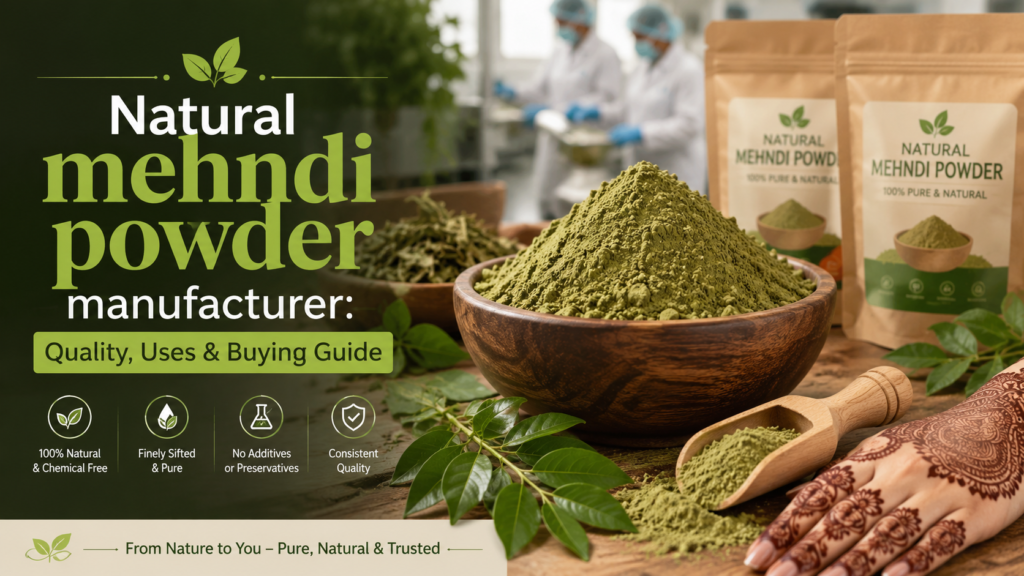
Good mehndi powder does not need a dramatic sales pitch. People who use henna regularly can sense the difference as soon as they open the pouch. Fresh powder has a leafy smell, mixes without fighting the spoon, and gives a paste that feels clean rather than gritty.
Buying it, though, is not always simple. Online listings often look the same. Every pack claims purity, freshness, and deep colour. For a salon owner, bridal artist, retailer, or haircare brand, the choice has to be more practical. You need a Natural mehndi powder manufacturer that understands the crop, grinding, packing, and the way customers actually use the powder.
Taj Henna’s site points to Sojat, Rajasthan, natural henna products, no-chemical claims, careful packing, and bulk supply. Those details shape this buying guide.
Why the source matters more than the label
Henna begins as a leaf, not a cosmetic formula. The final powder depends on leaf quality, drying, cleaning, grinding, and storage. If any step is rushed, the powder may still look fine in a photo, but the paste may feel rough or the colour may develop weakly.
This is why a Natural mehndi powder manufacturer should be judged on process, not packaging alone. A good-looking pouch helps, but it cannot fix old stock or uneven filtering. Buyers should look for clean raw material, sensible processing, proper packing, and clear product guidance.
What a Natural mehndi powder manufacturer should get right
A dependable producer pays attention to details that many first-time buyers miss. Colour is one of them, but not in the way people often think. Fresh henna powder is usually greenish to olive-green, depending on the leaf and season. A shade that looks unnaturally bright should make a buyer pause.
Texture is another sign. For body art, the powder should be fine enough to pass smoothly through a cone. For hair use, it should feel soft and easy to spread, even if the filtering requirement is different. Gritty powder wastes time and can be uncomfortable to rinse out.
Smell also tells a story. Henna should smell earthy and plant-like. A stale, damp, perfumed, or sharp smell is not reassuring. Good packing matters because powder can absorb moisture and odours during storage and transport.
Main uses of mehndi powder
Mehndi is still closely tied to weddings, festivals, and family rituals. Artists need paste that flows neatly, holds a clean line, and develops a steady stain after removal. Even small issues, like paste clogging inside a cone, can slow down bridal work.
Haircare is another major use. Many people apply natural mehndi powder for shine, colour, and a more conditioned feel after washing. For buyers who are specifically comparing henna for hair colouring, Taj Henna’s page on organic henna manufacturer for hair color is a useful related resource. The result depends on natural hair colour, application time, paste thickness, and whether the user mixes it with tea water, curd, or other botanicals.
Retail brands may buy henna for private labelling, salon packs, or herbal beauty kits. In that case, consistency matters as much as the first impression. A customer expects the second pack to perform like the first one.
How to judge quality before you order from a Natural mehndi powder manufacturer
The best way to judge a product is to test it. Ask for a sample and mix it exactly as your customer would. Do not judge only the dry powder. Watch how it takes water, whether it forms lumps, how smooth the paste feels, and how easily it spreads.
For hair use, try a strand test. It will show colour direction, rinse feel, and any roughness after drying. For body art, test line flow, paste texture, stain development, and how the colour looks after a full day rather than immediately after removal.
Buyers looking for pure mehndi powder should also read ingredient details carefully. Pure should mean straightforward and understandable, not hidden behind vague wording. A confident supplier should not mind direct questions about ingredients, batch handling, shelf life, and suitable uses.
Buying from a Natural mehndi powder manufacturer: questions to ask
Before placing a bulk order, ask how the powder is packed, what sizes are available, and whether the supplier can support salon, retail, or export needs. Also ask about dispatch timelines, storage advice, and whether the same grade can be supplied regularly.
If you are comparing a mehndi manufacturer India search result with another supplier, do not rush toward the lowest quote. A cheap batch that performs badly costs more in the long run. It can damage reviews, slow down artists, and create doubts among repeat buyers.
Product range can also tell you something. A supplier that works with henna, indigo, amla, shikakai, reetha, and related botanicals may understand how customers build a complete haircare routine. If you plan to sell herbal mehndi powder, check whether the term reflects the actual product and not just a fashionable label.
Packing, storage, and freshness
Henna powder does not enjoy heat, sunlight, or humidity. A well-packed pouch helps preserve the powder during travel, but the buyer still has a role after delivery. Store packs in a cool, dry place. Once opened, close the pouch tightly or move the powder to an airtight container.
Salons and retailers should mark opening dates and use older packs first. It sounds basic, but stock rotation keeps good product from sitting around until it loses strength.
Common buyer concerns
One common concern is whether the powder is safe for sensitive users. No natural product suits everyone, so patch testing is sensible, especially for first-time users. Clear instructions help customers avoid leaving paste on too long or mixing it with unsuitable ingredients.
Another concern is colour. Henna Paste does not behave like synthetic dye. On hair, it usually gives warm reddish to brownish tones depending on the natural base. On skin, stain depth varies with body heat, aftercare, and application time. Honest guidance prevents disappointment.
Buyers searching for chemical free mehndi powder should avoid products that promise instant black stain or unusually fast results without explaining the formula. Traditional henna takes time. That slow development is part of its nature.
Conclusion
A good henna purchase feels calm, not confusing. You know what the powder is meant for, how it has been packed, how to store it, and what kind of result to expect. That is the real value of working with a Natural mehndi powder manufacturer rather than picking a random pouch from a crowded listing. For home users, it means smoother mixing and more predictable colour. For salons, artists, and brands, it means fewer awkward customer conversations and a better chance of repeat orders. Take your time with samples, ask plain questions, and pay attention to texture, smell, and after-use feel. Henna is a traditional product, but buying it well is still a practical business decision. The best supplier makes that decision easier, not louder. A steady source also helps you plan stock with confidence and serve repeat buyers without second-guessing every new batch.